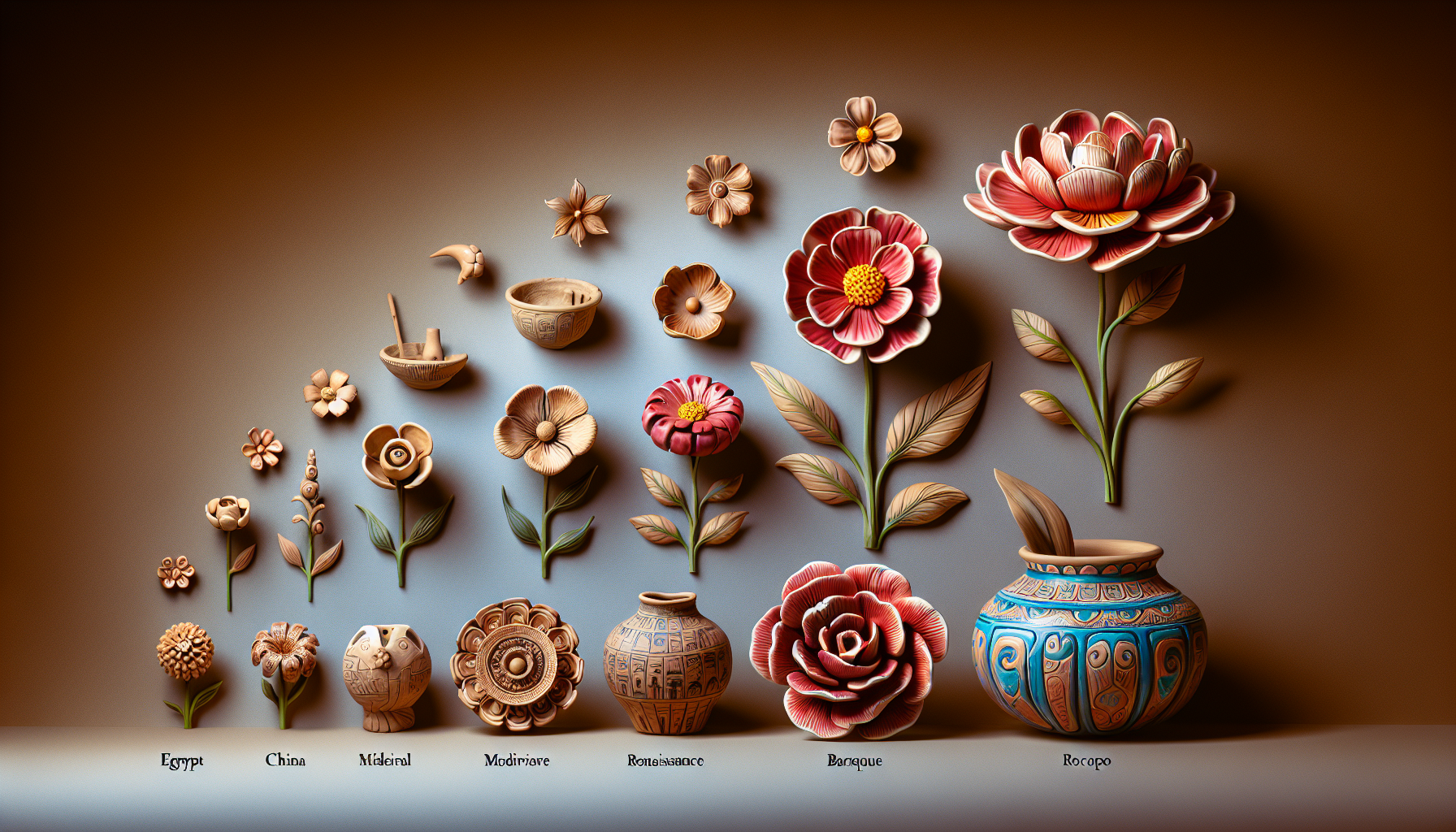
History of clay flowers spans centuries and continents, blending art, craftsmanship, and cultural expression. These delicate and intricate creations have evolved from simple decorative items to highly valued pieces of art, cherished for their beauty and historical significance.
Ancient Origins
The art of crafting flowers from clay can be traced back to ancient civilizations. In Egypt, they were often used as funerary offerings, symbolizing life and rebirth. Similarly, in ancient China, artisans crafted thems to adorn temples and palaces, reflecting the natural beauty and spiritual significance of flowers in their culture.
Medieval and Renaissance Periods
During the medieval period in Europe, clay flowers became popular as part of religious art. Monasteries and churches often featured these decorative elements, which were used to symbolize purity and divine beauty. The Renaissance period saw a revival of classical art forms, and clay flowers were incorporated into various artworks, including frescoes, sculptures, and decorative pottery.
17th and 18th Centuries: European Flourish
The 17th and 18th centuries marked a golden age for clay flowers in Europe. The Baroque and Rococo periods, known for their ornate and elaborate styles, saw their proliferation in various forms. In Italy, the Capodimonte porcelain factory, established in Naples in 1743, became renowned for its exquisite clay flowers. These flowers were often used to decorate tableware, figurines, and other decorative objects.
In France, the Sèvres porcelain factory, founded in 1738, also gained fame for its delicate clay flowers. These pieces were highly sought after by the European aristocracy and were often featured in the opulent interiors of palaces and stately homes.
19th Century: Industrialization and Innovation
The 19th century brought significant advancements in clay production techniques, thanks to the Industrial Revolution. Mass production methods made clay flowers more accessible to a wider audience. However, the artistry and craftsmanship of hand-made flowers remained highly valued.
In England, the Wedgwood company, founded by Josiah Wedgwood, became a prominent producer. Wedgwood’s innovative techniques and designs set new standards for quality and aesthetics in clay art.
20th Century to Present: Artistic Revival and Modern Interpretations
The 20th century saw a revival of interest in traditional crafts, including the art of making clay flowers. Artists and artisans around the world began experimenting with new techniques and styles, blending traditional methods with contemporary design.
In contemporary art, they continue to inspire artists and designers. Modern techniques, such as 3D printing, have expanded the possibilities for creating intricate and realistic floral designs. Today, these are not only valued for their aesthetic appeal but also for their cultural and historical significance.
History of Clay Flowers in India
The history of clay flowers in India is a fascinating journey that blends traditional craftsmanship with artistic innovation. Rooted in the country’s rich heritage of pottery and ceramics, the creation of clay flowers began to flourish as artisans sought to capture the beauty of nature in enduring forms. Influenced by India’s diverse flora and its vibrant tradition of floral motifs in art and architecture, clay flowers became popular for their intricate designs and vibrant colors. These artistic pieces have been used to decorate homes, temples, and palaces, symbolizing beauty, prosperity, and the eternal cycle of life. Today, Indian clay flowers are celebrated for their unique blend of cultural symbolism and exquisite craftsmanship, continuing to be cherished as both decorative and symbolic treasures.
Conclusion
The history of clay and clay flowers is a testament to human creativity and the enduring appeal of nature’s beauty. From ancient religious artifacts to modern artistic masterpieces, these delicate creations have captured the imagination and admiration of people across cultures and centuries. As both art and craft, clay and clay flowers continue to evolve, preserving a rich legacy while embracing new innovations.
To bring a piece of this exquisite tradition into your home, explore our collection of handcrafted clay flowers or let us know what you have in mind. Each piece is meticulously crafted by skilled artisans, ensuring that you receive a unique and beautiful work of art. Visit our site today and add a touch of Indian heritage and elegance to your decor. Support our artisans and preserve this beautiful craft by purchasing your clay flowers from us now!
Leave a Reply